
Fayette Parole and Probation Compared
Parole follows a prison sentence. The West Virginia Parole Board decides whether an eligible imprisoned person may leave custody under conditions. WVDCR Parole Services then provides field supervision. Probation comes from a judge, often as the sentence itself or as part of a suspended sentence. The Fayette County probation office and the sentencing court are the right sources for that status.
Neither term means that the case or sentence has vanished. A parolee remains under the sentence until discharge. A probationer remains bound by the court order until the court ends, modifies, or revokes probation. The comparison below keeps the two Fayette County paths separate.
| Point | Parole | Probation |
|---|---|---|
| Who imposes it | West Virginia Parole Board after prison eligibility | Fayette County court as a sentence or condition |
| Who supervises | WVDCR Parole Services | West Virginia judiciary probation staff |
| Core record | Decision Summary, release record, and later discharge | Sentencing, probation, modification, and discharge orders |
| Local contact | Beckley Parole Office | Fayette County Probation Office |
| Custody after violation | Possible regional-jail detention and Board revocation process | Possible court warrant, hearing, and revocation |
Verify Fayette Post-Release Supervision
No verified public directory lists every West Virginia parolee or probationer. The WVDCR Escapees and Absconders search covers an exception status, not the whole supervised population. A missing name there cannot prove that the person is compliant, discharged, or never supervised. Verification must begin with the decision that created supervision.
Use the following sequence for a Fayette County record. It avoids treating parole eligibility, a release date, and final discharge as the same event.
- Identify whether the person left a WVDCR prison on parole or received probation from a court. Check the facility and case type before calling an office.
- For parole, obtain the Parole Board Decision Summary and the WVDCR release record. A calendar entry or parole eligibility date only shows consideration.
- For probation, obtain the Fayette sentencing order and any later modification, revocation, or discharge order from the proper court clerk.
- Contact the Beckley Parole Office for parole navigation or Fayette County Probation for court supervision. Provide enough identity and case detail to avoid a same-name error.
- If custody has changed, cross-check WVDCR and VINE. A present jail record may reflect an alleged violation rather than a new final sentence.
Fayette Parole Office Route
WVDCR assigns Fayette County parole matters to the Beckley Parole Office. That office belongs to Southern District Region 3, which also serves Greenbrier, Nicholas, Pocahontas, and Raleigh counties. The regional setup explains why a Fayette parole question routes outside Fayette County. Office staff can direct an appropriate supervision inquiry, but the release and Board records remain the best documentary proof.
Beckley Parole Office
3225 Robert C. Byrd Drive
Beckley, WV 25801
304-256-6950
Before calling, note the full name, OID if known, releasing prison, and the date shown on the WVDCR record. Ask a narrow question, such as which office handles supervision or which record confirms discharge. Staff may restrict person-specific details, and a public caller should not expect access to an entire correctional file.
The official office record identifies Fayette coverage and the Beckley contact. That local routing matters because calling the county probation office about prison parole will send the inquiry down the wrong legal path.
The releasing institution also matters. A Mount Olive prisoner can leave on parole and report through the regional field office, but a Fayette detainee leaving Southern Regional Jail on bond has not become a parolee. Match the custody source to the Board decision before asking about supervision. If the record says transfer, continue with the receiving custodian instead of assuming that field supervision began.
Fayette Probation Record Route
Fayette County probation is locally administered by the judiciary. The official Fayette court directory lists the probation office at 106 East Maple Avenue, Fayetteville, WV 25840, with 304-574-4205 and fax 304-574-4296. A separate official judiciary contact list has displayed 304-574-4209, so start with the number on the county court page and note the alternate listing if needed.
The sentencing order is the strongest starting point. It may show the probation term and the conditions imposed by the judge. Later docket entries or orders may show a change, an alleged violation, revocation, or discharge. A clerk can identify the public docket path, while probation staff handle supervision. Those roles are related but not interchangeable.
The official Fayette judiciary page shows the local clerks and probation contact path. Its screenshot comes from the West Virginia court system's Fayette County directory.
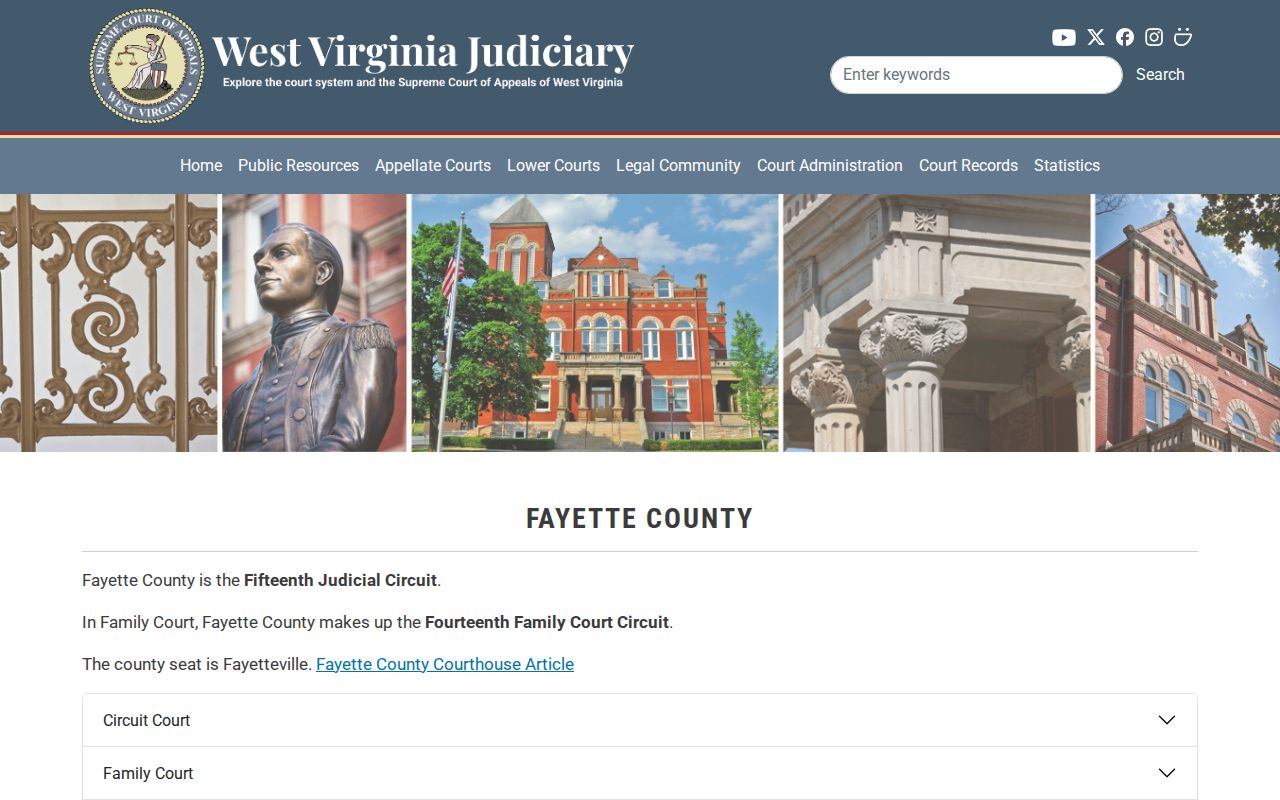
The directory gives the correct local route for a court-imposed supervision record. It should not be substituted for the Beckley parole route.
Fayette County Probation Office
106 East Maple Avenue
Fayetteville, WV 25840
304-574-4205
Fax: 304-574-4296
Fayette Supervision Violations and Custody
Conditions are rules attached to release or sentence. They may require reporting, travel approval, treatment, payment, or compliance with other directions in the order. The exact conditions come from the person's record. General descriptions should never replace the Decision Summary, release papers, or Fayette court order.
An alleged violation does not by itself prove a final revocation. A parole violation can bring a formerly released person back to a regional jail while the Parole Board process is pending. The Board states that revocation normally requires a panel finding after an evidentiary hearing unless that hearing is waived. Regional-jail revocation hearings may take place by video.
The official Escapees and Absconders search may identify a person in that exceptional status. An absconder is someone authorities report as having left supervision without authorization or stopped reporting. Yet no hit is inconclusive. Check the date and the system behind any result, then obtain the current order or agency record.
VINE can signal a move into or out of a reporting facility. It does not replace a revocation decision, nor does a transfer notice mean community release. Note: State every status with its record date because a released parolee may later return to custody.
Fayette Parole Hearing Records
The Parole Board schedules a hearing in the month of eligibility. Its materials use PED for parole eligibility date. PED is not the interview date and does not promise release. Board outcomes can include a grant, a grant with special conditions, a contingent grant, denial, or deferral while more information is gathered.
A contingent grant can still depend on an approved release plan. The Board's procedural rules allow time to tender a plan and can lead to denial when a suitable plan is not secured. A denial usually leads to another interview later, but the interval depends on the governing rules and sentence. The individual Decision Summary identifies the actual result and any requirements.
The official hearing information and monthly calendar offer schedule context, not a name-searchable results database. The calendar reviewed during research was stale, so confirm current scheduling with the Board instead of treating old dates as upcoming. Physical release still needs a WVDCR or VINE event.
If the available calendar shows a facility abbreviation, first match that abbreviation to the person's actual prison or regional jail. A hearing scheduled at an institution does not show a favorable result. Ask for the Decision Summary through an authorized Board or WVDCR channel, or make a narrow records request that allows protected details to be redacted. Then compare the decision date with the later custody event.
Revocation hearings form a different track. They concern alleged conduct after parole began, not the initial choice to release. A person held at Southern Regional Jail for a revocation matter may therefore have both a past prison-release record and a current jail-custody record. Keeping those episodes separate prevents an old release from being stated as the person's present status.
Fayette Supervision Discharge Records
Final discharge is the end of the supervision status. It is distinct from leaving a prison or jail. Under West Virginia Code §62-12-18, parole ordinarily continues to the sentence maximum less lawful deductions. After at least one year from release, WVDCR may request early discharge, with the Board chair making the decision. A life-term parolee cannot discharge before five years.
Probation discharge comes through the judicial case. Look for a completion or discharge order rather than inferring the result from a quiet docket or an absconder-search miss. The order can also resolve whether supervision ended normally, changed, or followed revocation proceedings.
- Parole
- Conditional community release from imprisonment under Board terms and WVDCR supervision.
- Probation
- A court-imposed sentence or status supervised through the judiciary.
- Absconder
- A person reported as having stopped required supervision contact or left without authorization.
- Revocation
- A formal decision withdrawing supervision status after the required process.
- Discharge
- The official end of parole or probation, documented by the proper authority.
The broader Fayette County released inmate search explains how custody, court, and release records fit together. Keep the prison exit, start of supervision, any later custody event, and final discharge as separate points on the timeline.